
Measles Is Back And It’s More Dangerous Than Most People Think
Many people assume measles is a disease of the past something their grandparents worried about, not them. But measles outbreaks are surging globally, and the virus remains one of the most contagious infectious diseases known to medicine. Understanding measles symptoms, causes, and prevention is not just important for parents — it’s essential knowledge for every adult, caregiver, and health-conscious individual alive today.
📋 Table of Contents
What Is Measles?
Measles known medically as rubeola is a highly contagious viral infection caused by the measles virus (MeV), a member of the Paramyxoviridae family. It primarily affects the respiratory tract before spreading throughout the body, producing its characteristic symptoms including high fever, cough, runny nose, and a distinctive widespread rash.
Before the measles vaccine was introduced in 1963, measles infected an estimated 3 to 4 million people every year in the United States alone — and caused around 500 deaths, 48,000 hospitalizations, and 1,000 cases of permanent brain damage annually. Worldwide, measles killed approximately 2.6 million people per year before vaccination programs began.
Despite being entirely vaccine-preventable, measles has made a disturbing comeback in recent years. The WHO reported a 79% increase in global measles cases between 2022 and 2023 alone driven largely by declining vaccination rates in the wake of the COVID-19 pandemic. This is not a disease we can afford to ignore.
How Does Measles Spread?
Measles is extraordinarily contagious — arguably one of the most infectious diseases ever identified. To put this into perspective: one person with measles can infect 12 to 18 unvaccinated people they come into contact with. By comparison, COVID-19’s basic reproduction number is 2 to 3. Influenza is around 1.3. Measles sits in a category of its own.
The virus spreads through respiratory droplets and airborne particles released when an infected person coughs, sneezes, or even breathes. What makes measles particularly alarming is its ability to survive in the air and on surfaces for up to two hours after an infected person has left the room. You don’t need to be near someone to catch it.
💡 Did You Know?
An infected person is contagious for 4 days before the rash appears and for 4 days after. This means people are unknowingly spreading measles before they even know they’re sick — making early recognition of measles symptoms, causes, and prevention absolutely critical for stopping outbreaks in their tracks.
Measles Symptoms: Stage by Stage
Measles doesn’t appear all at once. The disease progresses through distinct stages, each with its own set of recognizable signs. Understanding this progression helps you identify measles early — when isolation and medical attention matter most.
Stage 1: Incubation Period (Days 1–14)
After exposure to the measles virus, there is an incubation period of 10 to 14 days during which the virus multiplies inside the body without producing any visible symptoms. The person feels completely well — but the virus is silently replicating and preparing for its assault on the immune system.
Stage 2: Prodromal Phase (Days 1–4 of Illness)
The illness begins suddenly and aggressively. Classic early measles symptoms include:
- High fever — often reaching 40°C (104°F) or higher
- Persistent dry cough — one of the hallmark early signs
- Coryza — runny nose with profuse discharge
- Conjunctivitis — red, watery, light-sensitive eyes
- Koplik’s spots — tiny white or bluish-white spots inside the cheeks, appearing 2–3 days before the rash. These are pathognomonic of measles — meaning they appear in measles and virtually no other disease.
Many parents mistake this stage for a severe cold or flu. The presence of Koplik’s spots inside the mouth is the clearest early indicator that measles — not a common viral illness — is the cause.
Stage 3: Rash Phase (Days 3–5 of Illness)
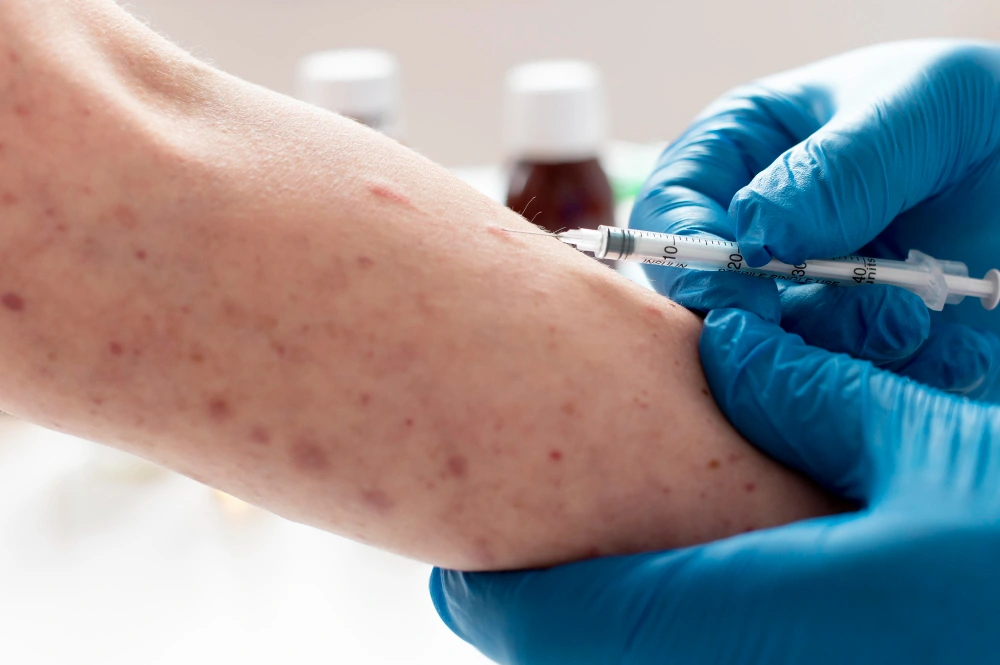
Around the third to fifth day of illness, the measles rash appears. It begins as flat red spots on the face — typically starting at the hairline and behind the ears — before spreading downward to the neck, trunk, arms, legs, and feet over the next 2 to 3 days.
The rash is maculopapular — meaning it starts as flat red patches that gradually become raised and may merge into large blotchy areas. At this point, the fever is typically at its highest and the person feels most unwell. The rash is not itchy in most cases — a feature that helps distinguish it from chickenpox.
Stage 4: Recovery Phase (Days 6–10)
In uncomplicated cases, the fever begins to subside as the rash reaches its peak. Over the following days, the rash gradually fades in the same order it appeared — face first, then downward. A brownish discoloration of the skin may persist for 1 to 2 weeks after the rash disappears. Most people begin feeling significantly better within 7 to 10 days of illness onset.
| Stage | Timeline | Key Symptoms |
|---|---|---|
| Incubation | Days 1–14 post-exposure | No symptoms — virus multiplying silently |
| Prodromal | Days 1–4 of illness | High fever, cough, runny nose, red eyes, Koplik’s spots |
| Rash Phase | Days 3–5 of illness | Red blotchy rash spreading face to feet, peak fever |
| Recovery | Days 6–10 of illness | Fever subsides, rash fades, gradual improvement |
Causes and Risk Factors of Measles
The cause of measles is always the measles virus — a single-stranded RNA virus that has only one known serotype, meaning immunity from either natural infection or vaccination provides lifelong protection against all strains. Unlike influenza, measles does not mutate rapidly into new variants that escape immunity.
However, being exposed to the virus is not sufficient to guarantee infection. Your risk depends heavily on your immune status and circumstances.
Who Is Most at Risk?
- Unvaccinated children — The highest risk group globally. Children under 5 face the greatest risk of severe complications and death.
- Unvaccinated adults — People born before widespread vaccination programs may lack immunity. Adults who missed their second MMR dose are also vulnerable.
- Infants under 12 months — Too young to be vaccinated; depend entirely on maternal antibodies, which wane by 6 months.
- Immunocompromised individuals — Those with HIV/AIDS, cancer patients on chemotherapy, or transplant recipients cannot mount adequate immune responses.
- Pregnant women — Measles during pregnancy significantly increases the risk of miscarriage, premature birth, and low birth weight.
- Malnourished individuals — Particularly those with vitamin A deficiency, which is strongly associated with severe measles and measles-related blindness.
- International travelers — Visiting regions with active measles outbreaks without verified vaccination status is a significant risk factor.
Dangerous Complications You Must Know
Measles is not simply a childhood rash that comes and goes. For a significant proportion of those infected — particularly in vulnerable populations — measles can lead to severe, life-threatening complications that leave lasting damage long after the acute illness resolves.
⚠️ Serious Measles Complications Include:
- Pneumonia — The most common cause of measles-related death. Affects up to 1 in 20 infected children.
- Encephalitis (Brain Inflammation) — Occurs in approximately 1 in 1,000 cases. Can cause permanent brain damage, intellectual disability, deafness, or death.
- Blindness — A leading cause of childhood blindness in developing countries, particularly in vitamin A-deficient children.
- Ear infections (Otitis Media) — Affects up to 1 in 10 children with measles; can lead to permanent hearing loss.
- Severe diarrhea and dehydration — A significant cause of measles mortality in malnourished children.
- Subacute Sclerosing Panencephalitis (SSPE) — A rare but uniformly fatal brain disease that develops 7–10 years after measles infection, more common in children infected before age 2.
- Immune amnesia — Perhaps measles’ most underappreciated danger. The virus destroys immune memory cells, leaving survivors vulnerable to other infections for 2–3 years after recovery.
Globally, measles still kills approximately 130,000 people per year — the vast majority of them unvaccinated children under the age of five in low-income countries. Even in developed nations, measles outbreaks regularly result in hospitalizations and, occasionally, deaths.
How Is Measles Diagnosed?
In many cases, an experienced clinician can diagnose measles based on clinical presentation alone — particularly the combination of high fever, the three C’s (cough, coryza, conjunctivitis), Koplik’s spots, and the characteristic spreading rash. However, laboratory confirmation is important — especially during potential outbreak situations — to guide public health responses.
Diagnostic Tests Used
- Serology (blood test) — Detection of measles-specific IgM antibodies in the blood confirms recent infection. IgM levels peak 1–3 weeks after rash onset.
- RT-PCR (throat swab or urine) — Detects measles virus genetic material; highly sensitive and specific, used to confirm cases and identify virus strains during outbreaks.
- Viral culture — Less commonly used; primarily for research and strain characterization.
If measles is suspected, immediately isolate the patient and contact your local health authority. Measles is a notifiable disease in most countries — meaning doctors are legally required to report confirmed cases to public health departments to enable rapid outbreak response.
Measles Treatment and Home Care
Here is an important truth that surprises many people: there is no specific antiviral medication to treat measles. Treatment is entirely supportive — focused on managing symptoms, preventing complications, and supporting the immune system while the body fights the virus on its own.
This is precisely why measles prevention through vaccination is so much more important than treatment. Once infected, the focus shifts entirely to damage control.
Supportive Care at Home
- Rest — Complete rest is essential. Physical exertion during measles worsens symptoms and increases complication risk.
- Fever management — Paracetamol (acetaminophen) or ibuprofen to control high fever. Never give aspirin to children with viral illness due to the risk of Reye’s syndrome.
- Hydration — Encourage plenty of fluids — water, diluted fruit juice, oral rehydration solutions — to prevent dehydration from fever and diarrhea.
- Eye care — Clean the eyes gently with a warm, damp cloth to remove discharge. Dim lighting helps with light sensitivity (photophobia).
- Isolation — Keep the infected person isolated from unvaccinated individuals for at least 4 days after the rash appears.
Vitamin A Supplementation
The WHO strongly recommends vitamin A supplementation for all children diagnosed with measles — regardless of their country or nutritional status. Vitamin A deficiency dramatically worsens measles outcomes, and supplementation has been shown to reduce measles mortality by up to 50% in high-risk populations. Two doses of high-dose vitamin A are given on consecutive days.
When to Seek Emergency Medical Care
- Breathing difficulties or rapid breathing
- Seizures or loss of consciousness
- Severe dehydration — no urine output for 8+ hours
- Extremely high fever not responding to medication
- Worsening symptoms after initial improvement
- Any signs of ear pain or vision changes
Measles Prevention: Vaccines and Herd Immunity
The single most effective tool against measles is the MMR vaccine — a combined vaccine that protects against measles, mumps, and rubella. It is safe, highly effective, and has saved an estimated 21 million lives between 2000 and 2017 alone according to WHO data.
MMR Vaccine Schedule
| Dose | Recommended Age | Protection Level |
|---|---|---|
| First Dose | 12–15 months | ~93% effective against measles |
| Second Dose | 4–6 years | ~97% effective after both doses |
| Adults (unvaccinated) | Any age — catch-up vaccination | Highly protective at any age |
| High-risk infants | 6–11 months (travel/outbreak) | Partial — still need routine doses |
Understanding Herd Immunity
Herd immunity against measles requires that at least 95% of the population be immune — either through vaccination or prior infection. This threshold is higher than for almost any other vaccine-preventable disease because measles is so extraordinarily contagious.
When vaccination rates fall below 95%, the protective shield of herd immunity breaks down — and measles finds vulnerable unvaccinated individuals, including infants too young to be vaccinated, immunocompromised patients who cannot receive vaccines, and those for whom the vaccine provided incomplete protection.
This is why every individual vaccination decision affects the health of the entire community — not just the person being vaccinated.
Is the MMR Vaccine Safe?
Extensive, decades-long research involving hundreds of millions of vaccine doses has consistently demonstrated that the MMR vaccine is safe and does not cause autism — a claim comprehensively debunked and retracted from the scientific literature. Common side effects are mild and temporary: soreness at the injection site, low-grade fever, or a faint rash in a small number of recipients. Serious adverse events are exceedingly rare — far rarer than the complications of measles infection itself.
Frequently Asked Questions
What are the first signs of measles?
The earliest measles symptoms are high fever (often 39–40°C), a persistent dry cough, runny nose, and red watery eyes — symptoms that closely resemble a severe cold. The appearance of Koplik’s spots (tiny white spots inside the cheeks) 2–3 days before the rash is the most distinctive early sign that distinguishes measles from other viral illnesses.
Can adults get measles?
Absolutely. Any unvaccinated person — regardless of age — can contract measles. Adults who were vaccinated with only one dose of the MMR vaccine may also have reduced immunity. In fact, measles in adults tends to be more severe than in children, with higher rates of pneumonia and other complications. Adults unsure of their vaccination history should consult their doctor about catch-up MMR vaccination.
How long is measles contagious?
A person with measles is contagious from 4 days before the rash appears until 4 days after. This 8-day window of contagiousness — much of which occurs before the person even knows they have measles — is one of the main reasons measles spreads so rapidly through communities with low vaccination rates.
Does getting measles once give you lifetime immunity?
Yes. Natural measles infection produces lifelong immunity — you cannot get measles twice from natural infection. However, this immunity comes at a steep price: the measles virus causes “immune amnesia,” wiping out immune memory cells built against other diseases. This leaves survivors vulnerable to other infections for 2–3 years — making the cost of natural immunity far higher than the cost of vaccination.
Is the measles rash itchy?
Unlike chickenpox, the measles rash is typically not itchy — or only mildly so. The rash consists of flat red spots that merge into large blotchy areas, starting from the face and spreading downward over 2–3 days. The absence of significant itching, combined with the presence of high fever and respiratory symptoms, helps clinicians distinguish measles from other rash-causing illnesses.
What should I do if my child is exposed to measles?
Act immediately. Contact your doctor or local health authority right away. If your child is unvaccinated and under 6 months, they may receive immunoglobulin (antibody) therapy within 6 days of exposure for some protection. If your child is between 6–12 months, emergency MMR vaccination within 72 hours of exposure may provide protection. For children over 12 months who have had one dose, a second dose can be given immediately if not already administered.
Protect Your Family — Don’t Wait for an Outbreak
Measles is not a harmless childhood rite of passage. It is a serious, potentially fatal disease that causes suffering, permanent disability, and death — all of which are entirely preventable with a safe, highly effective vaccine that has been used successfully for over 60 years.
Understanding measles symptoms, causes, and prevention gives you the knowledge to protect your children, your family, and your community. Check that your family’s MMR vaccinations are up to date. If you’re unsure — ask your doctor today.
Vaccination is not just a personal choice. It’s a responsibility we carry toward every vulnerable person around us who cannot protect themselves.
Medical Disclaimer: The information provided in this article is for general educational purposes only and does not constitute medical advice, diagnosis, or treatment. Measles is a serious infectious disease requiring professional medical evaluation and management. Always consult a qualified healthcare provider regarding vaccination schedules, exposure concerns, or illness management. BestInMeds.com strongly supports evidence-based vaccination programs as recommended by the WHO and national health authorities.