Going Through Fertility Treatment? This Is What Every Woman Needs to Know
For millions of women around the world, fertility treatment is a path filled with hope, courage, and enormous physical and emotional investment. But one complication — often not discussed openly enough — can turn that journey into a medical emergency. Ovarian Hyperstimulation Syndrome (OHSS) is a potentially serious response to fertility medications that every woman undergoing IVF or ovulation induction must understand. Knowing the ovarian hyperstimulation syndrome symptoms and treatment options could protect your health — and your dream of having a baby.
📋 Table of Contents
- → What Is Ovarian Hyperstimulation Syndrome (OHSS)?
- → What Causes OHSS?
- → Types and Severity Levels of OHSS
- → Ovarian Hyperstimulation Syndrome Symptoms
- → Who Is Most at Risk for OHSS?
- → How Is OHSS Diagnosed?
- → Serious Complications of Severe OHSS
- → Ovarian Hyperstimulation Syndrome Treatment
- → How to Reduce Your Risk of OHSS
- → Frequently Asked Questions
What Is Ovarian Hyperstimulation Syndrome (OHSS)?
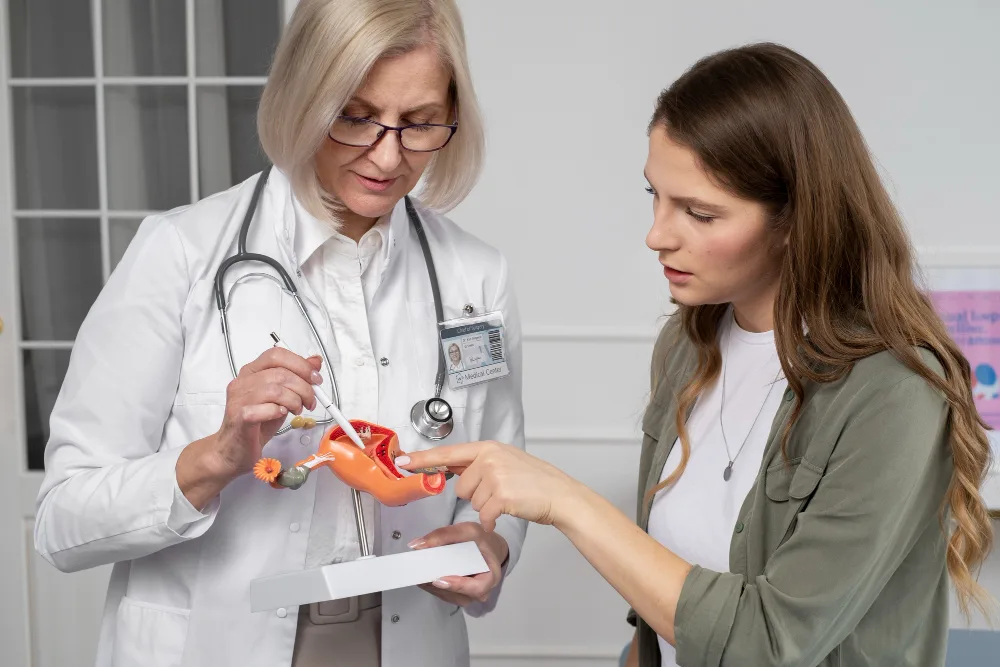
Ovarian Hyperstimulation Syndrome — commonly abbreviated as OHSS — is an exaggerated response of the ovaries to fertility medications used during assisted reproductive treatments such as IVF (In Vitro Fertilization), IUI, or ovulation induction. Instead of producing a small number of mature eggs as intended, the ovaries become severely overstimulated and enlarge dramatically — sometimes to the size of a grapefruit — while leaking fluid into the abdominal and chest cavities.
OHSS affects approximately 1 to 2% of women undergoing IVF in its severe form, while mild to moderate OHSS affects up to 33% of all IVF cycles. Despite its prevalence in fertility medicine, many women are not fully informed about this condition before beginning treatment — which is why recognizing ovarian hyperstimulation syndrome symptoms and treatment options is so critically important.
Consider the experience of a 29-year-old woman undergoing her first IVF cycle. Five days after her egg retrieval, she woke up unable to button her jeans — her abdomen had swollen visibly overnight. By the next morning, she was struggling to breathe comfortably. She didn’t know these were classic OHSS warning signs. Fortunately, her clinic recognized the symptoms quickly and intervened before her condition became life-threatening. Stories like hers are why awareness matters so profoundly.
What Causes OHSS?
OHSS is caused by an exaggerated ovarian response to fertility hormones — particularly the hormone human chorionic gonadotropin (hCG), which is used to trigger final egg maturation before retrieval. When the ovaries are hypersensitive to these hormones, they produce an excessive number of follicles and release large amounts of chemical mediators — particularly Vascular Endothelial Growth Factor (VEGF) — that dramatically increase the permeability of blood vessel walls.
This increased vascular permeability causes fluid to leak out of the bloodstream and into body cavities — particularly the abdomen and, in severe cases, the space around the lungs. The result is a dangerous combination of fluid accumulation outside the blood vessels alongside a reduced blood volume inside them — creating conditions that strain the kidneys, liver, and cardiovascular system simultaneously.
The Role of Fertility Medications
The medications most commonly associated with triggering OHSS include:
- Gonadotropins (FSH and LH injections) — used to stimulate multiple follicle development; the primary trigger for ovarian hyperstimulation
- hCG trigger shots — used to mature eggs before retrieval; acts as the most potent OHSS trigger, particularly in women whose ovaries are already hyperstimulated
- Clomiphene citrate (Clomid) — oral ovulation induction medication; less commonly causes OHSS but cases do occur
Additionally, if a pregnancy occurs following IVF, the naturally rising hCG levels from the developing embryo can worsen and prolong OHSS significantly — which is why OHSS associated with successful pregnancy tends to be more severe and longer-lasting than OHSS in cycles where pregnancy does not occur.
Types and Severity Levels of OHSS
OHSS exists on a spectrum from mild discomfort to life-threatening emergency. Medical professionals classify it into three severity levels — each requiring a different level of management and monitoring.
| Severity | Key Features | Management |
|---|---|---|
| Mild OHSS | Abdominal bloating, mild discomfort, nausea, ovaries slightly enlarged (up to 8cm) | Home monitoring, rest, hydration, pain relief |
| Moderate OHSS | Significant abdominal distension, nausea/vomiting, ultrasound shows fluid in abdomen, ovaries 8–12cm | Close clinic monitoring, possible IV fluids, electrolyte management |
| Severe OHSS | Rapid weight gain (>1kg/day), difficulty breathing, reduced urine output, large ovaries (>12cm), blood clot risk | Hospitalization required — IV fluids, drainage, blood thinners, intensive monitoring |
Additionally, OHSS is classified as early-onset (occurring within 9 days of the hCG trigger injection) or late-onset (occurring 10 or more days after trigger, usually associated with a developing pregnancy). Late-onset OHSS tends to be more prolonged and severe because rising pregnancy hCG levels continuously restimulate the already hyperstimulated ovaries.
Ovarian Hyperstimulation Syndrome Symptoms
Recognizing ovarian hyperstimulation syndrome symptoms early is the single most important factor in preventing mild cases from escalating to severe, life-threatening OHSS. Symptoms typically begin 3 to 10 days after the hCG trigger injection or egg retrieval procedure.
Mild to Moderate OHSS Symptoms
- Abdominal bloating and distension — The abdomen feels swollen, tight, and uncomfortable — often described as feeling “six months pregnant” within days of egg retrieval
- Pelvic discomfort or pain — Dull aching or cramping in the lower abdomen, caused by enlarged ovaries pressing on surrounding structures
- Nausea and vomiting — Persistent nausea that may or may not be accompanied by vomiting; often worse in the morning
- Diarrhea — Loose stools resulting from fluid shifts in the abdominal cavity irritating the digestive system
- Mild weight gain — Caused by fluid retention; gaining 1–2 kg over several days is common in moderate OHSS
- Breast tenderness — Often difficult to distinguish from normal post-retrieval hormonal effects
Severe OHSS Symptoms — Seek Emergency Care Immediately
⚠️ Contact Your Doctor or Go to Emergency Immediately If You Experience:
- Rapid, significant weight gain — More than 1 kg (2.2 lbs) in 24 hours
- Severe abdominal pain — Intense, worsening pain that is not relieved by rest or mild pain medication
- Difficulty breathing — Shortness of breath, especially when lying down — fluid around the lungs
- Decreased or dark urine output — Urinating very little or not at all; urine appears very dark (concentrated)
- Severe nausea and vomiting — Unable to keep any fluids down
- Dizziness or fainting — Signs of low blood volume and cardiovascular compromise
- Leg pain or swelling — Could indicate a dangerous blood clot (deep vein thrombosis)
Who Is Most at Risk for OHSS?
While OHSS can occur in any woman undergoing fertility treatment, certain characteristics significantly increase the risk. Identifying high-risk patients before beginning stimulation allows fertility specialists to tailor treatment protocols to minimize the danger.
| Risk Factor | Why It Increases Risk |
|---|---|
| Young age (under 35) | Higher ovarian reserve and greater ovarian sensitivity to hormones |
| Low body weight / low BMI | Less body mass means higher hormone concentration per unit weight |
| Polycystic Ovary Syndrome (PCOS) | Already has high antral follicle count; ovaries are highly responsive to gonadotropins |
| High antral follicle count (AFC) | More follicles available to be stimulated means greater overall response |
| High AMH levels | Indicates large ovarian reserve — closely associated with OHSS risk |
| Previous OHSS episode | Strongest predictor — women who developed OHSS before are likely to again |
| Large number of follicles during stimulation | More than 14 follicles developing simultaneously significantly raises risk |
| High estradiol levels during stimulation | Rapidly rising or very high estradiol is a warning sign of over-response |
💡 PCOS and OHSS — A Critical Connection
Women with Polycystic Ovary Syndrome (PCOS) face a significantly elevated risk of OHSS — some studies suggest up to 6 times higher risk compared to women without PCOS. The multiple small follicles characteristic of PCOS respond aggressively to fertility medications, making careful dose management and monitoring absolutely essential in this population. If you have PCOS and are considering IVF, this conversation with your specialist must happen before stimulation begins.
How Is OHSS Diagnosed?
OHSS diagnosis is based on a combination of clinical symptoms, physical examination, and investigative tests. Because the severity of OHSS determines the appropriate management strategy, accurate assessment at presentation is critical.
Diagnostic Tests Used
- Transvaginal or abdominal ultrasound — Confirms ovarian enlargement, measures ovary size, and detects free fluid in the abdomen (ascites). This is the primary imaging tool for OHSS assessment.
- Blood tests — Full blood count (looking for hemoconcentration — elevated hematocrit indicates significant fluid shifts), electrolytes (particularly sodium and potassium), kidney function tests (creatinine, urea), liver function tests, and coagulation profile to assess clotting risk
- Weight monitoring — Daily weight measurement is a simple but powerful tool — rapid weight gain of more than 1kg per day signals dangerous fluid accumulation
- Urine output monitoring — Reduced urine output is an early warning sign of kidney compromise from fluid depletion within the bloodstream
- Chest X-ray or CT scan — In severe cases, to detect pleural effusion (fluid around the lungs) or other complications
Serious Complications of Severe OHSS
When OHSS progresses to its severe form without adequate management, it can cause a cascade of life-threatening complications affecting multiple organ systems. This is why prompt recognition and treatment of ovarian hyperstimulation syndrome symptoms is so critically important.
- Thromboembolic events (blood clots) — One of the most feared complications of severe OHSS. Hemoconcentration from fluid shifts makes the blood dangerously thick and prone to clotting. Blood clots can form in the legs (DVT), lungs (pulmonary embolism), or — particularly alarmingly — in unusual sites like the jugular vein or cerebral veins. Thromboembolic complications are a leading cause of OHSS-related mortality.
- Acute kidney injury — Reduced blood volume reaching the kidneys, combined with fluid shifts, can cause acute kidney damage ranging from temporary impairment to acute kidney failure requiring dialysis.
- Ovarian torsion — Massively enlarged ovaries can twist on their own blood supply — a surgical emergency causing sudden, severe pelvic pain. Without immediate intervention, the ovary can become necrotic (tissue death) and must be removed.
- Respiratory failure — Large pleural effusions (fluid around the lungs) compress lung tissue, making breathing progressively more difficult. Mechanical ventilation may be required in the most severe cases.
- Liver dysfunction — Elevated liver enzymes are common in severe OHSS; frank liver failure is rare but documented.
- Infection and sepsis — Prolonged hospitalization and invasive procedures carry infection risk that can compound an already compromised physiological state.
Ovarian Hyperstimulation Syndrome Treatment
There is currently no specific medication that directly reverses OHSS — treatment is primarily supportive, focused on managing symptoms, preventing complications, and allowing the condition to resolve naturally as ovarian stimulation subsides. However, the approach differs significantly depending on severity.
Mild OHSS — Home Management
- Rest — Avoid strenuous physical activity, which can worsen ovarian enlargement and increase torsion risk. Light walking is acceptable and encouraged to reduce blood clot risk.
- Hydration — Drink 1–2 liters of electrolyte-containing fluids daily — sports drinks, coconut water, or oral rehydration solutions are preferable to plain water as they help maintain electrolyte balance.
- Pain management — Paracetamol (acetaminophen) for discomfort. Avoid NSAIDs like ibuprofen as they may impair kidney function in the context of fluid shifts.
- Daily weight monitoring — Weigh yourself at the same time each morning. Report any gain of more than 1kg per day to your fertility clinic immediately.
- Avoid intercourse — Enlarged ovaries are at increased risk of torsion with physical activity including sexual activity.
Moderate to Severe OHSS — Hospital Treatment
- Intravenous fluid therapy — IV fluids — particularly albumin or hydroxyethyl starch solutions — help restore blood volume while drawing fluid back from body cavities. Plain saline is used cautiously due to sodium imbalance risk.
- Paracentesis (abdominal drainage) — When ascites is severe enough to compromise breathing or kidney function, fluid is drained from the abdomen using a needle under ultrasound guidance. This procedure provides rapid, dramatic relief and may need to be repeated.
- Anticoagulation therapy — Low molecular weight heparin (LMWH) injections are given to prevent dangerous blood clots in patients with severe OHSS or those who become pregnant.
- Cabergoline — A dopamine agonist that reduces VEGF production and vessel permeability. When given early, it significantly reduces the severity of OHSS and is increasingly used as a preventive measure in high-risk patients.
- Intensive monitoring — Regular blood tests, urine output measurement, daily weighing, and ultrasound scans throughout hospital admission
- Embryo freeze-all strategy — If severe OHSS develops before embryo transfer, all embryos are frozen and transfer is postponed until the condition fully resolves — typically in 4 to 6 weeks. This prevents pregnancy-related hCG from worsening the condition.
How to Reduce Your Risk of OHSS
While OHSS cannot always be completely prevented, modern fertility medicine has developed a range of strategies that significantly reduce its likelihood and severity — particularly in high-risk patients. The best approach is a conversation with your fertility specialist before stimulation begins.
Protocol Modifications
- Lower gonadotropin starting doses — Using the minimum effective dose reduces the risk of ovarian over-response, particularly in young women and those with PCOS
- GnRH antagonist protocol — Using a GnRH antagonist rather than a long agonist protocol allows the use of a GnRH agonist trigger instead of hCG — dramatically reducing OHSS risk
- GnRH agonist trigger instead of hCG — Replacing the traditional hCG trigger shot with a GnRH agonist trigger (e.g., Lupron) reduces the duration and intensity of luteal phase hCG exposure — significantly lowering OHSS risk
- Coasting — Temporarily withholding gonadotropin injections when estradiol levels rise too rapidly, allowing levels to stabilize before triggering
- Freeze-all embryo strategy — Freezing all embryos and deferring transfer eliminates the hCG surge of early pregnancy that triggers late-onset OHSS
Preventive Medications
- Cabergoline — Given at the time of trigger injection in high-risk patients; reduces vascular permeability and significantly decreases moderate OHSS incidence
- Intravenous albumin — Administered at egg retrieval in very high-risk cases to maintain plasma oncotic pressure and reduce fluid leakage
- Metformin — For women with PCOS, starting metformin before IVF has been shown to reduce OHSS risk
Frequently Asked Questions
How long does OHSS last?
Mild to moderate OHSS typically resolves on its own within 1 to 2 weeks if pregnancy does not occur — as the ovaries naturally return to normal size once stimulation hormones clear the body. However, if pregnancy does occur, rising hCG levels from the embryo continue to stimulate the ovaries, and OHSS can persist for several weeks — sometimes up to 10 to 12 weeks into the first trimester. Severe OHSS always requires closer monitoring regardless of pregnancy status.
Can I get pregnant if I have OHSS?
Yes — OHSS does not prevent pregnancy, and in fact, OHSS associated with a successful pregnancy (late-onset OHSS) tends to be more prolonged because pregnancy hCG sustains ovarian stimulation. However, in cases of moderate to severe OHSS, embryo transfer is typically postponed and all embryos are frozen for a later frozen embryo transfer (FET) cycle. This approach is safer for both mother and embryos and does not reduce the overall chances of achieving a successful pregnancy.
Is OHSS dangerous for my baby if I’m already pregnant?
OHSS itself does not directly harm the developing baby — the condition affects the mother’s physiology, not the embryo. However, the complications of severe OHSS — blood clots, kidney failure, and the medications used to treat them — can potentially affect pregnancy outcomes. This is why close monitoring and expert management of OHSS in pregnant women is so important. Most women who develop OHSS during IVF go on to have completely healthy pregnancies and babies.
Will I get OHSS again in my next IVF cycle?
Having had OHSS once is the strongest predictor that you may experience it again — but it is not inevitable. With appropriate protocol modifications for your next cycle — lower starting doses, a GnRH antagonist protocol, an agonist trigger, and preventive medications like cabergoline — your fertility specialist can significantly reduce your risk. Always disclose your OHSS history clearly to any new clinic or specialist managing your subsequent cycles.
What should I eat and drink during OHSS recovery?
During ovarian hyperstimulation syndrome treatment and recovery, focus on high-protein foods (eggs, chicken, fish, legumes) — protein helps maintain plasma oncotic pressure and reduces fluid leakage from blood vessels. Drink electrolyte-rich fluids rather than plain water — sports drinks, coconut water, or oral rehydration solutions. Avoid alcohol, caffeine, and salty processed foods. Eat small, frequent meals if nausea is limiting your intake. Your clinic may provide specific dietary guidelines based on your severity level.
Can OHSS be fatal?
In extremely rare cases, yes — severe untreated OHSS can be fatal, primarily through thromboembolic complications (blood clots in the lungs or brain) or multi-organ failure. However, OHSS-related deaths are exceedingly rare when the condition is recognized early and managed appropriately in a medical setting. This underscores why prompt reporting of worsening symptoms to your fertility team is so critically important — never dismiss symptoms as “just part of the process.”
You Deserve to Be Fully Informed on Your Fertility Journey
The path to parenthood through fertility treatment is one of the bravest journeys a person can take. It demands enormous physical, emotional, and financial courage. You deserve to walk that path with complete information — including knowledge of the risks as well as the rewards.
Understanding ovarian hyperstimulation syndrome symptoms and treatment is not about frightening you away from fertility treatment — it’s about empowering you to recognize warning signs early, advocate for yourself with your medical team, and make informed decisions at every step of your treatment.
Ask questions. Know the signs. Trust your body’s signals. And never hesitate to call your clinic — no symptom during fertility treatment is too small to report.
Medical Disclaimer: The information provided in this article is for general educational purposes only and does not constitute medical advice, diagnosis, or treatment recommendation. Ovarian Hyperstimulation Syndrome is a serious medical condition requiring professional evaluation and management by a qualified reproductive endocrinologist or fertility specialist. Every patient’s situation is unique — always follow the specific guidance of your healthcare team regarding your fertility treatment protocol, monitoring schedule, and symptom management. BestInMeds.com does not endorse any specific fertility clinic, medication, or treatment protocol.